


The main alternatives to focus groups are one-to-one interviews, surveys, asynchronous video interviews, AI-conducted depth interviews, diary and mobile ethnography, online communities, social listening and online focus groups. Most comparisons rank them on cost and speed. The better question is which escape the tradeoff focus groups impose: understand a few people well, or hear from enough to act.
Straight to the comparison: the eight methods, side by side.
Cost is the first complaint. Industry publication Greenbook puts two in-person focus groups in a major metro area at a total bill of $8,000 to $12,000 per project, and a competently run online group at $4,000 to $7,000. Neither figure includes travel or expedited fees.
Then time. Recruitment, fieldwork and analysis make a commissioned study a multi-week undertaking. In a 2017 piece in Quirk's, an online qualitative vendor described an agency's proposal putting each phase of research at six to eight weeks, plus two to three for analysis. Weigh it accordingly: nine years old, and the source sells the alternative.
Then geography. Every extra market means another room, another moderator, another recruitment cycle. And then the reason people say last: the group effect biases the result.
Pricey, slow, spread across markets, and the room changes the answer. The first three are logistics problems, and vendors solve those every year. The fourth is a measurement problem, and it survives almost every fix on the market.
Open any vendor comparison table for this category. They quantify cost, timeline and scalability. Then they reach the depth column and write "High". Or "Very high (adaptive probing)".
Depth is the only dimension in this category with no unit attached. That is not sloppiness. It is the tell: nobody has agreed what would count as a measurement.
Underneath sits an assumption none of those pages questions: that you must choose between understanding a few people properly and hearing from enough people to act. Depth or reach. Pick one.
The tradeoff is real, but it is not a law of research. It is an artifact of moderator economics. A skilled moderator is expensive and can only be in one conversation at a time. So you batch eight or ten people into a room and rename the interference "group dynamics". Group size is priced, not principled. Eight is what one moderator's hour buys, and most projects that book eight are buying the arithmetic, not the interaction.
Look again at the standard list. Online focus groups keep the group and drop the venue. One-to-one interviews and ethnography keep the sequential human and drop the scale. Surveys and social listening buy scale by removing the conversation. Every focus group alternative pays the same toll at a different booth.
Take an automotive brand with strong digital traffic and weak dealership intent. That was the brief a client brought us, and we return to it with numbers further down. People read the specs, watch the ads, then stop. The behavioral question is why hesitation survives all that information. That needs depth, because hesitation is not a rating, and reach, because one room cannot tell you whether the hesitation is a segment or an accident. No column on the vendor tables tells you which method delivers both.
Three things reduce it at the margin and none removes it. Collect private written answers before the discussion opens. Cap the group at three or four people from one segment. Screen out anyone who sat in a group in the last six months. Each shrinks the audience effect. None removes the audience, and tighter moderation produces more polite conformity, not less of it. The group is the instrument, and the instrument changes the reading.
The usual explanation is that the loudest person steers the room. True, but that is the visible half. The deeper mechanism is simpler: people can feel judged, and a group is a room full of judges. What goes missing is not the opinion someone lost an argument about. It is the one never floated.

The methods literature is careful here, and we should be too. A 2022 review in Revista de Saúde Pública identifies focus groups, alongside interviews, as one of the two collection techniques most prone to social desirability bias. It also notes that group interaction cuts both ways: a group can police claims that do not match reality, or form what the author calls a "social micro-pact", collectively hiding behaviors participants consider inappropriate.
So groups are not uniformly worse than one to one. They are less predictable, and you do not get told which way the room went.
In a randomized study in the International Journal of Social Research Methodology, participants assigned to one-to-one interviews disclosed more personal thoughts and feelings about a sensitive topic than those assigned to focus groups. They also rated the session climate more positively. The 2019 sample was 65 female undergraduates discussing body image, and the authors note the literature is mixed. Suggestive, not settled.
First, the concession. Minutes are not depth. Someone can talk for fourteen minutes and say nothing. They are simply the closest observable proxy anyone here has put a number on, and we picked it partly because we can measure it. Read it as a floor, not a verdict.
In the pre-visit study we ran for that automotive brand, people stayed in a one-to-one audio conversation for an average of 14 minutes. Voluntarily, with no booked slot to sit through. 73% showed a positive emotional shift, and stated openness to visiting a dealership rose 50% against the pre-conversation answer. A further 17% asked to be contacted, a commercial signal rather than a research one, included here only because it is hard to fake disengagement and then hand over your phone number.
Apply the same discount to that as to anyone else's numbers. These were visitors who chose to start a conversation on the brand's own site, through a Welcome Station™, not participants recruited into a research sample, and self-selection lifts engagement. We have not published the sample size, the fielding window, or how the emotional shift was scored. One study, one category, one client, and we ran it.
On the employee side, a Conversational Study™ we ran for a global food brand averaged more than 16.5 minutes per conversation. The surveys before it had established that morale was down. What they could not show was why, so leadership was left guessing where to focus.
Put that next to what people say they will give a questionnaire. Research across two German online panels, published in the International Journal of Market Research in 2020, put respondents' ideal survey length at 10 to 15 minutes and their tolerated maximum at 20 to 28, varying by panel and by measure. Read honestly, that cuts both ways: 14 minutes sits inside the band people already accept from a form. Which is the point. The willingness is there, and a short form never asks for it.
Fourteen minutes is not a vanity metric. It is what happens after the scripted answer runs out.
The objection that actually kills qualitative budgets is not bias. It is n=8.
Eight people cannot carry a national claim, so qualitative findings get filed as color and the budget goes to quant. Fair enough. But ask where eight came from. It is not a finding about how many people you need. It is how many humans one moderator can handle in a sequential hour of paid time.
Run the conversations in parallel and that ceiling stops being a property of the method. Sample size becomes what it always was in quant: a function of the sampling frame and the budget. That means soliciting a panel or a client database and sizing it to what the client funds. Conversational Studies are scoped at 150 to 200 participants, and above 200 for a segmentation. That parallel model is the subject of a separate piece on AI-conducted qualitative research methods, which argues the real shift is AI that conducts the interview rather than AI that codes the transcript.
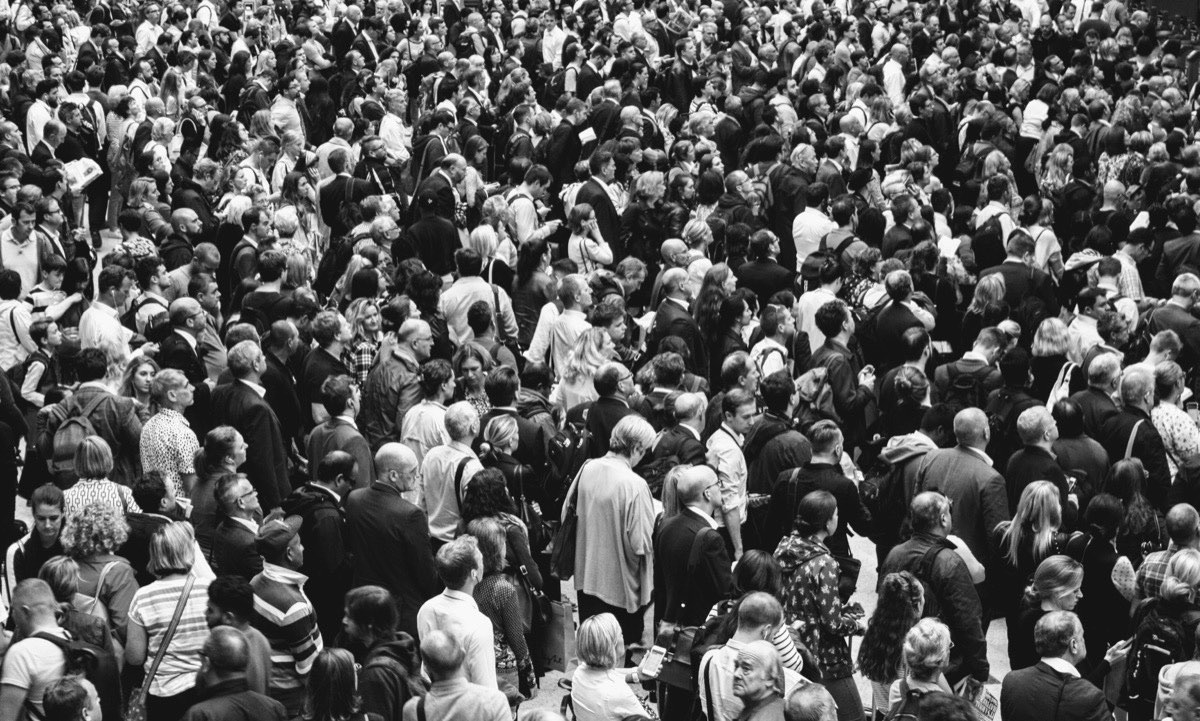
Here is the part a careful reader should hold us to. None of that makes qualitative research representative by itself. Method does not confer representativity. A badly drawn sample of 2,000 is not representative either, and the industry has a live example. Sample provider Rep Data ran a study across six leading online sample sources in March and April 2025 and flagged more than 30% of respondents as suspicious or outright fraudulent, at similar rates across proprietary panels and large exchanges. Rep Data sells fraud detection, so weigh the source accordingly. It also covered general commercial sample, not B2B panels.
That exposure is ours too. When we field against a panel rather than a client's own database, we draw from the same pool, and the screening burden does not go away because the conversation is longer.
So the claim stays narrow, deliberately. Parallel conversations remove sample size as a ceiling imposed by the method. Whether your sample represents your market still depends on how you draw it. That is a sampling decision, and it is yours.
Eight methods get proposed as replacements, and they are not interchangeable. The column that matters is the one nobody fills in: how long one person spends thinking out loud.
| Method | Sustained engagement per person | Reach ceiling | Time to first findings | Best at | What you give up |
|---|---|---|---|---|---|
| In-person focus group | About 7 to 11 min of airtime each, in front of an audience | 8 to 10 per session, one room at a time | Weeks: recruit, schedule, field, analyze | Co-creation, live steering, observation | Privacy, and the quiet participant's answer |
| Online focus group | Same arithmetic, no venue to book | 8 to 10 per scheduled session | Weeks, minus the travel | Multi-city groups without venue costs | The same audience effect, now on camera |
| One-to-one depth interview | 45 to 60 min booked, all of it private | One conversation at a time | Sequential; a wave at a time | Sensitive topics, reconstructing a decision | Scale, and the calendar |
| Survey | 10 to 15 min people call ideal, 20 to 28 tolerated | Sized to the panel budget | Days once fielded | Validating a hypothesis you have; sizing a known segment | The follow-up question |
| Asynchronous video interview | Self-paced. No independent benchmark published | Parallel, no scheduling ceiling | Days, in parallel | Fast reactions with a face attached | Probing; you get the prompt you wrote back |
| AI-conducted depth interview | 14 min voluntary and 16.5+ min employee, both our own studies | Parallel; scoped to sampling frame and budget | Days, in parallel | Hesitation, motivation, emotional shift at sample size | No live steering; topics fixed before fielding |
| Diary or mobile ethnography | Minutes per entry over the study window. No published benchmark | 8 to 15 participants | The study window, then analysis | How a decision formed over time | Immediacy; participants report themselves |
| Online community | Minutes per prompt over weeks. No published benchmark | A standing recurring panel | Ongoing once recruited | Longitudinal tracking, co-creation | Freshness; a standing panel stops being naive |
| Social listening | None. Nobody is talking to you | Whatever is public | Same day; the data already exists | Learning the words your market uses | The question you actually wanted to ask |
Three of these rows are where most decisions land.
One-to-one depth interviews win when a second participant's presence would be the whole variable, or when you need to reconstruct one decision in forensic detail with a researcher free to chase whatever surfaces. They lose the moment the readout has to survive "is that true of the market?", because the calendar caps you at a number your stakeholders will discount.
Asynchronous video wins when you need many first reactions quickly, with faces and tone attached, against a fixed stimulus. It loses when the answer you need is the one behind the first answer. Nothing probes: the participant responds to the prompt you wrote, and the follow-up you did not write never happens.
AI-conducted depth interviews win when you need that follow-up from more people than a calendar allows: hesitation, motivation, the reason someone did not act. They lose when you need to change direction mid-session, or when the deliverable is something a group has to build together.
Notes on the table. The focus group airtime figures are arithmetic from the standard format, not a study: a 90 to 120 minute session, eight to ten participants, less a quarter of the clock for the moderator. The 45-to-60-minute interview figure and the 8-to-15-participant diary range are conventional practice, not published benchmarks. The 14 and 16.5-minute cells are our own studies, which is exactly the kind of source we are telling you to discount; we publish them because nobody in this category publishes a number at all, not because they are independent. There is no cost column on purpose: the only focus group cost figures we could trace to an independent publication are Greenbook's, quoted earlier, and most numbers in this category's tables trace back to vendor blogs, ours included. For a rough ordering anyway, sort by how much human time each method buys: social listening, surveys and online communities at the low end, asynchronous video and AI-conducted interviews in the middle, one-to-one interviews and moderated groups at the top.
Most frameworks here sort by logistics: budget, timeline, geography, scale. Those are procurement filters. They tell you what you can afford, not what you will learn.
Start from the sentence you would need to write in the readout.
"Why did they not book the test drive?" A behavior that did not happen has no rating scale attached. You need a private setting and enough time to reconstruct the moment. One to one, and not a short one. The same gap opens one level up, where marketing effectiveness measurement proves what worked without explaining why.
"Does this concept land?" A group is defensible. Reaction to a stimulus is partly social in the real world too. Just do not let the same session become your read on why it landed.
"What will an employee not write down?" A scored form cannot ask a second question. In the food brand study, the surveys established that morale was down and could not show what was driving it. The missing piece is not privacy. It is the follow-up.
"How did this decision form over six weeks?" Diary or mobile ethnography. No single session recovers a sequence the person has already compressed in memory.
"Is what we heard true of the market?" A sampling question wearing a method question's clothes. Size the frame and fund it.
One pattern cuts across all five. Our airline work found that passengers almost never leave for a single reason, and a group session flattens that into whichever cause the room found easiest to say aloud.
One override sits above the framework: if you need to change direction mid-session, the group is the only option on the list.
Are focus groups still a thing? Yes, and usage data says so, with a caveat about who was surveyed.
In GreenBook's 2024 GRIT Insights Practice Report, fielded in late 2023, 69% of client-side research teams reported using in-person focus groups or in-depth interviews, and 73% online focus groups or IDIs with webcams. The report concludes that surveys, focus groups and in-depth interviews "remain the foundation of the insights industry." Usage is eroding at the edges: in-person qualitative fell at least 5% in six of GRIT's eight segments. GRIT is an opt-in survey of its own audience, so read it as direction, not census.
The real reason buyers keep booking the room is not in that report.
It is control. In a focus group you can call through to the moderator, change direction, and push on what just surfaced. No parallel method replaces that. In a Conversational Study the client approves the topics and tests the conversation experience up front. After that, each conversation goes where the participant takes it. You cannot steer it mid-session.
Four further losses are worth naming, and the first is the largest.
Co-creation. When the deliverable is something the group builds together, a concept, a name, a pack design, a service blueprint, there is no parallel substitute. Eight people arguing over a mock-up in real time is the method, not the interference, and nothing we run reproduces it.
Group energy, next: one person's half-formed idea sparking another's is real, and one-to-one work does not reproduce it. Then stakeholder observation: an executive who watched six sessions argues with the readout far less than one handed it, and sometimes hears what the research team framed out. That is worth real money, and it is what buys next year's budget. And shared-stimulus follow-up: when everyone reacted to the same thing in the same room, you can probe the disagreement while it is still live.
Buyers who weigh all that and still book the room are usually buying control, and sometimes buying an output only a room produces. On a high-stakes launch, either is defensible.
Run the group when the room does work no individual can do: building something together, or putting your stakeholders in front of the same evidence at the same time. Run something else when the room is only interference between you and the individual answer.
What is similar to focus groups? Eight methods get proposed as replacements: one-to-one depth interviews, surveys, asynchronous video interviews, AI-conducted depth interviews, diary and mobile ethnography, online communities, social listening, and online focus groups. The comparison table above sorts them by how long one person actually spends thinking out loud.
What's another way to say focus group? Group discussion, group depth interview, or GD. Vendors also sell mini-groups, triads and dyads, the same instrument with fewer people in the room. Remote versions get called virtual focus groups. When someone says "qual", they usually mean groups and one-to-one interviews together.
What is the cheapest focus group alternative? Social listening, because you are not paying anyone to talk. It is also the only method here with no conversation in it, so it tells you what your market says in public, not why it does.
Can AI replace focus groups? It replaces what the group was standing in for: depth, from enough people to act on. It does not replace what the room itself produces. If the deliverable is something the group builds together, or if you need to steer mid-session, keep the group.
How many people do I need for reliable qualitative research? No participant count makes qualitative work reliable on its own. Reliability comes from how the sample is drawn and how consistently the conversations probe.
What did your last study fail to explain?
Not the score. The thing underneath it. Name that question and we can tell you whether it is a depth problem, a sampling problem, or one nobody thought to ask.